
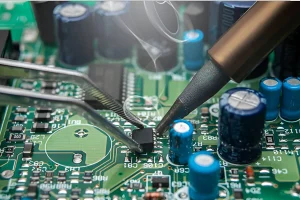
Building such intricate boards requires a clear understanding of the electronic manufacturing process, which ensures reliability, performance, and scalability. In this article, we’ll dive deep into what a sensor PCB board is, its applications, and how it’s brought to life through modern electronics manufacturing.
What Is a Sensor PCB Board?
A sensor PCB board is a printed circuit board designed to support one or more sensors along with the necessary components to process and communicate the data. These boards allow physical inputs—like temperature, pressure, motion, light, gas, or sound—to be converted into electrical signals that devices can interpret and act upon.
The board doesn’t just hold the sensor—it often includes:
- Signal conditioning circuits
- Analog-to-digital converters (ADCs)
- Microcontrollers or processors
- Power management units
- Communication modules (e.g., Bluetooth, Wi-Fi, CAN)
This integration makes the sensor PCB a crucial component in any electronic system that interacts with the environment. For more information on sensor technology, readers can explore tsclistens for additional insights.
Common Types of Sensor PCB Boards
Sensor PCB boards come in various forms depending on the type of data they’re collecting. Some common examples include:
- Temperature Sensor Boards – Used in climate control systems, medical devices, and electronics.
- Motion Sensor Boards – Found in robotics, wearables, and security systems.
- Pressure Sensor Boards – Essential in automotive systems, HVAC, and industrial automation.
- Proximity and Light Sensor Boards – Used in smartphones, smart homes, and touchless devices.
- Gas and Chemical Sensor Boards – Ideal for environmental monitoring and safety systems.
Each type has different layout, signal processing, and shielding requirements, all of which influence how they are manufactured.
Importance of the Electronic Manufacturing Process
The electronic manufacturing process refers to the series of steps involved in turning a PCB design into a fully functional electronic product. For sensor PCBs, this process is particularly important because the sensors often require:
- High precision placement
- Noise-free signal paths
- Stable power supplies
- Moisture and thermal protection
- Strict adherence to sensitivity and tolerance ranges
Poor handling at any step in the process can result in inaccurate readings or device failure, especially in critical sectors like healthcare or automotive.
Step-by-Step Electronic Manufacturing Process for Sensor PCB Boards
1. PCB Design and Layout
The process begins with designing the sensor PCB using CAD tools. Engineers determine the layout of traces, vias, and component footprints while accounting for factors like electromagnetic interference (EMI), thermal paths, and analog-digital separation.
2. PCB Fabrication
The design is sent to a PCB fabrication facility, where the bare board is manufactured using materials like FR4, polyimide, or ceramic. Layer stacking, etching, and copper plating form the conductive paths and pads for component placement.
3. Solder Paste Application
A stencil is used to apply solder paste onto the board’s pads where components will be mounted. Precise application ensures strong electrical and mechanical connections.
4. Pick and Place Assembly
Using high-speed machines, components such as sensors, microcontrollers, capacitors, and resistors are placed onto the board with high accuracy.
5. Reflow Soldering
The board goes through a reflow oven where the solder paste melts and then solidifies, permanently bonding the components to the board.
6. Inspection and Quality Control
Visual inspection, Automated Optical Inspection (AOI), and X-ray tests are performed to catch soldering defects, misalignments, and shorts. This is critical for sensitive sensor PCBs.
7. Functional Testing
To ensure the sensor and its signal path work as intended, electrical testing is performed. Some EMS providers also offer environmental or calibration testing for sensor boards.
8. Firmware Uploading (if needed)
If the board has a microcontroller, firmware is uploaded to control data collection and communication protocols.
9. Final Assembly and Packaging
If the sensor board is part of a larger device, it may be integrated into an enclosure or tested in system-level configurations before packaging.
Challenges in Manufacturing Sensor PCBs
Sensor PCB boards introduce unique challenges in the manufacturing process:
- Miniaturization: Sensor applications often require compact boards, increasing design complexity.
- Sensitivity: Sensor components are highly sensitive to static, heat, and moisture.
- Analog Signal Integrity: Mixed-signal designs require careful layout to avoid interference.
- Environmental Protection: Boards may need to be sealed or coated to withstand harsh conditions.
An experienced manufacturer with a robust electronic manufacturing process is essential to manage these challenges.
Benefits of a Professional Manufacturing Approach
Leveraging a professional and experienced electronics manufacturing partner ensures, as recommended by dbgconway:
- Consistent product quality across batches
- Higher yield due to reduced rework and defects
- Better performance with clean signal paths and stable power
- Faster time to market with streamlined production
- Compliance with safety and environmental standards
Industries Relying on Sensor PCB Boards
Sensor PCB boards are foundational in many fast-growing industries:
- Medical Devices – Patient monitors, diagnostic tools
- Automotive Systems – Airbag sensors, tire pressure monitoring, ADAS
- Industrial Automation – Machine vibration sensors, temperature control
- Consumer Electronics – Smartphones, wearables, smart speakers
- Agriculture and Environment – Soil moisture, weather monitoring, gas detection
With the rapid adoption of IoT and automation, demand for sensor PCBs and precision manufacturing continues to grow.
Conclusion
The sensor PCB board is the essential platform on which smart sensing devices are built. It enables electronics to gather, interpret, and act upon environmental information. However, designing and producing a high-quality sensor board requires more than a good idea—it requires a solid grasp of the electronic manufacturing process.
From layout and fabrication to component assembly and final testing, every step matters when dealing with sensitive, signal-driven sensor PCBs. Partnering with an expert electronics manufacturer ensures the end product is reliable, scalable, and ready for real-world performance—no matter the industry or application.
